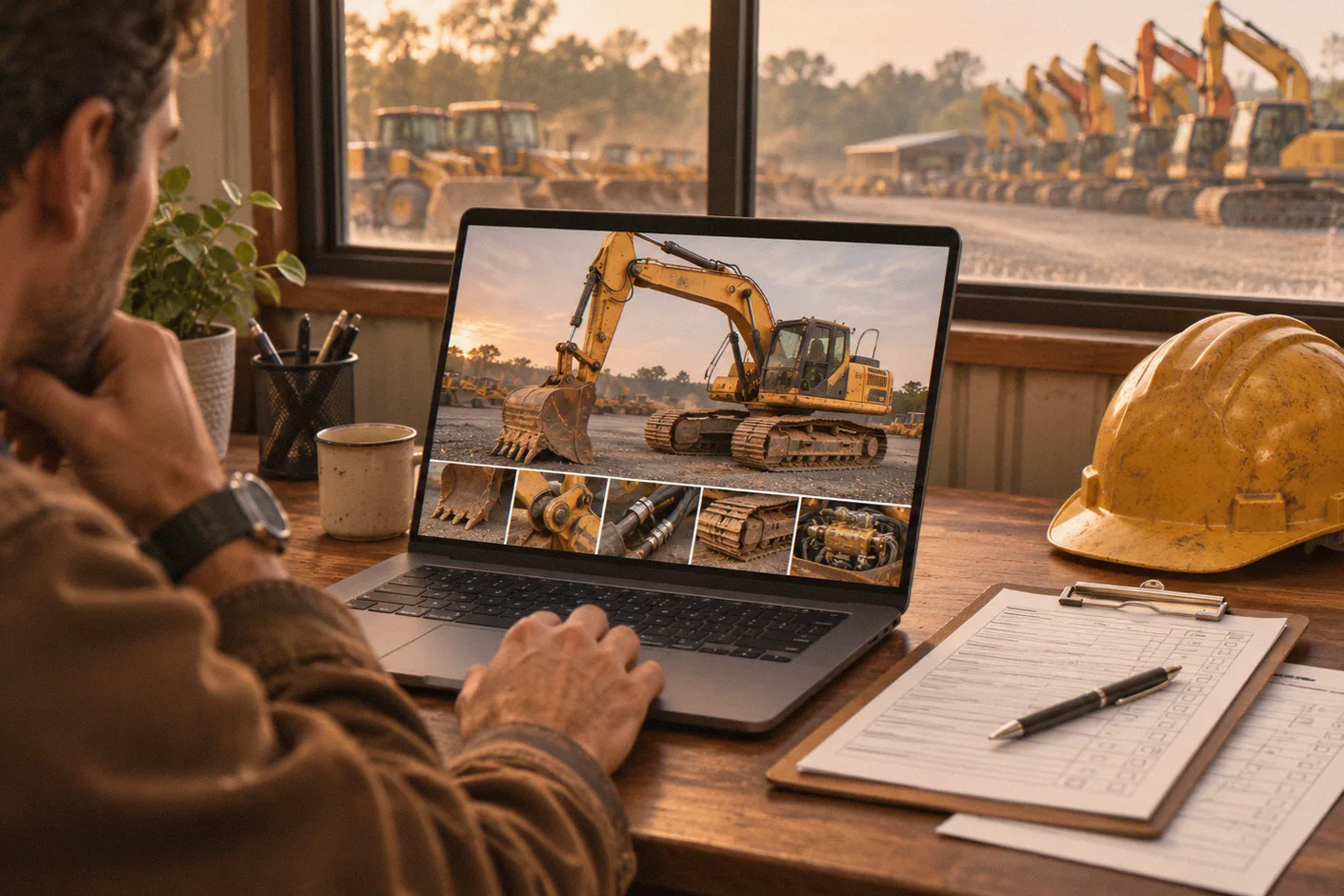

The right used mini excavator for sale is the one whose verified size, documented condition and delivered cost fit your job — not the one with the lowest asking price. This guide is written for contractors, equipment dealers and rental companies importing compact machines from China into Africa, the Middle East, West Asia and Southeast Asia. It explains how Yingju Machinery, a used construction machinery exporter in Hefei, Anhui, helps buyers compare units they may never see in person.
If you already know the model you want, go straight to our used excavators for sale. If you are still deciding, the sections below follow the order a careful buyer works through: size, model, price, condition, supplier and shipping.
Start with the job, not the listing
Mini excavator selection begins with four site facts: the narrowest access point, the digging depth you need, the ground you work on and the attachments you plan to run. A machine that cannot pass through a gate, or that has to stretch at full reach all day, is the wrong machine at any price.
| Typical job | What matters most | What to verify on the unit |
|---|---|---|
| Utility trenching and building foundations | Width, tail swing, digging depth | Track width, zero/short tail swing, arm length |
| Road maintenance and drainage | Reach, transport between sites | Boom/arm condition, quick-coupler type, transport height |
| Orchards, farms and land development | Ground pressure, light footprint | Rubber or steel tracks, blade condition, auxiliary hydraulics |
| Yard work and material handling | Cycle speed, attachment flexibility | Hydraulic flow for hammers or grabs, pin wear |
| Quarry and mining support tasks | Durability on rock | Undercarriage wear, cracks or welds on boom and arm |
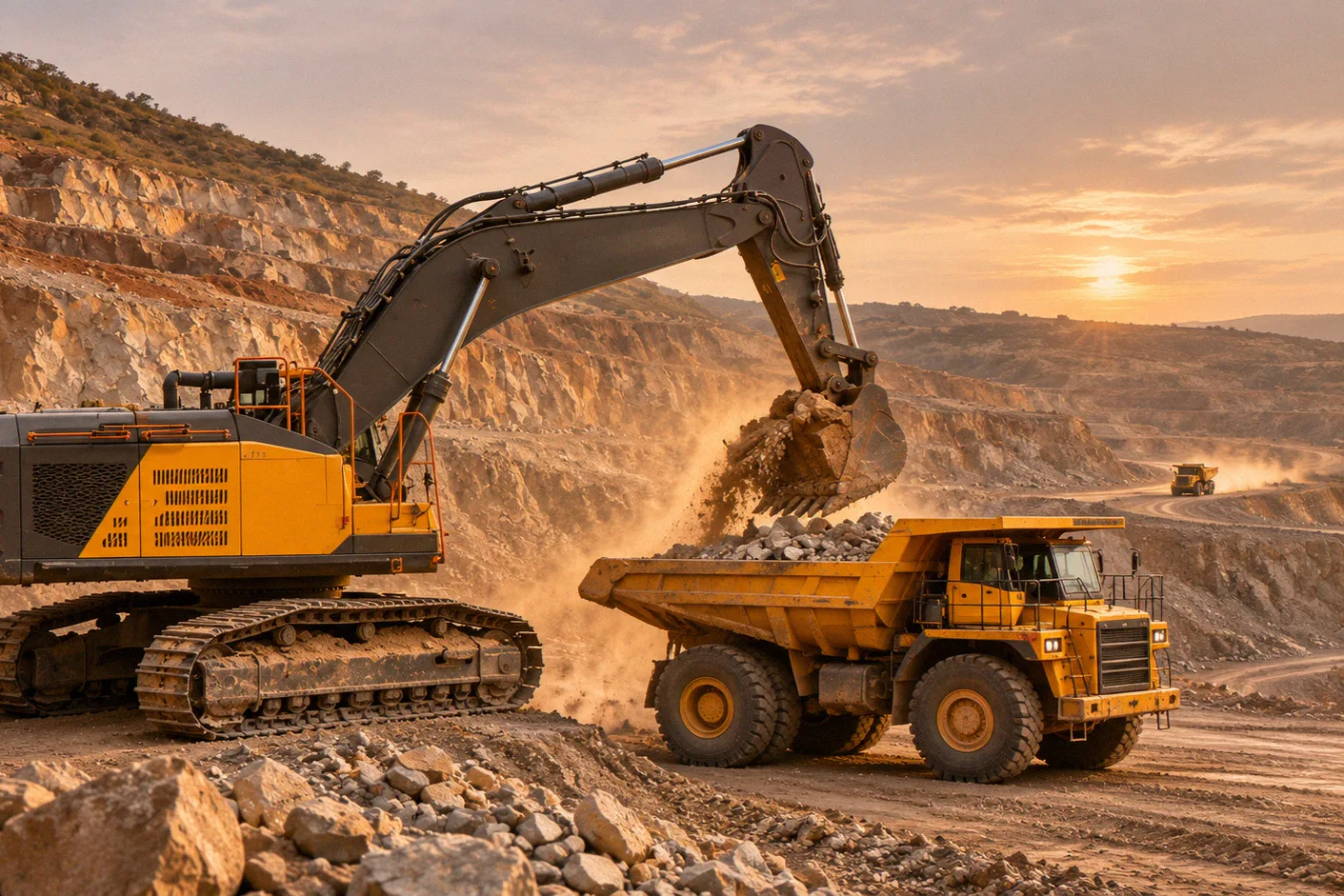
Mini excavators support quarry and mining sites with cleanup, drainage and service work; they do not replace production-class excavators for loading haul trucks. For heavy digging, look at 13–20+ ton machines instead.
How big is a “mini” excavator?
“Mini” and “compact” are marketing labels, not fixed classes, so always compare operating weight in kilograms. Industry sources use different cut-offs: one widely used definition puts compact excavators at up to roughly 8.5 tonnes operating weight, while some equipment guides stretch the mini category to about 10–11 tons. Two machines both sold as “mini” can therefore differ by several tonnes.
Weight matters for three reasons. It limits what the machine can lift and dig, it decides how the machine is transported on site, and it sets your shipping method. Ask for the operating weight from the manufacturer’s specification sheet for the exact model and generation, and check that the serial plate matches. As an example of how generations differ, Komatsu lists the current PC78US-11 at 7,910–8,250 kg operating weight; an older PC78US on a used yard may not match that figure exactly, so confirm it for the specific unit.
Compare models on verified specs
A model comparison is only useful when each line is backed by a document for that specific machine. The table shows popular compact models that appear in our listings and the evidence to request before choosing between them.
| Model | Size note | Evidence to request |
|---|---|---|
| Kubota U30 | Around the 3-ton class; confirm on the plate | Serial plate, hour-meter photo, track and blade condition |
| Kubota KX185 | Larger compact; confirm generation and weight | Cold-start video, swing and travel test |
| Komatsu PC40 | Around the 4-ton class; confirm on the plate | Pin and bushing play, hydraulic leak check |
| Komatsu PC78US | Upper compact class (PC78US-11: 7,910–8,250 kg per Komatsu) | Generation, undercarriage wear, transport height |
| Caterpillar 303.5E | Cat model numbers roughly track the tonnage class | Serial plate, hydraulic-cycle video |
| Caterpillar 305.5E2 | Around the 5-ton class; confirm on the plate | Boom and arm weld inspection, attachment list |
| Caterpillar 307.5 | Around the 7-ton class; confirm on the plate | Undercarriage photos, service records if available |
Availability changes daily, so treat these as models to consider rather than guaranteed stock. Each listing on our site shows year, working hours and location where recorded; when a price is not published, the card reads “Price on request” and we quote the specific unit. Buyers who prefer a familiar dealer network often start with Kubota, Komatsu or Caterpillar; Chinese brands such as Sany are worth comparing where local parts support exists.
One caution on hours: an hour-meter photo shows what the meter reads today. It does not prove lifetime use, because meters can be replaced or repaired. Compare the reading with wear on pins, pedals, the seat and the undercarriage, and with any service records the seller can provide.
Mini excavator price: read the whole quote
A used mini excavator’s price is only one part of its total import cost. The machine price depends on model, year, working hours, condition, repair history, included attachments and the number of units you buy — Yingju Machinery negotiates on multi-unit orders. The landed cost then adds handling, freight and destination charges that vary by port and country.
| Cost line | Who usually arranges it | Ask the seller |
|---|---|---|
| Machine price | Seller | Currency, validity date, attachments included |
| Agreed repairs or new parts | Seller | Written list of work done before shipment |
| Third-party inspection | Buyer or seller, by agreement | Inspector name, scope, who pays |
| Inland transport and export handling | Seller (EXW: buyer) | Is it in the quote? |
| Ocean freight and insurance | Depends on Incoterm | Method, port of loading, port of discharge |
| Destination charges, duties, taxes | Buyer | Check with your customs broker |
| Delivery to site | Buyer | Local trucking quote |
The Incoterm on the quote decides which lines are included. EXW means you collect from the seller; FOB includes delivery onto the vessel at the Chinese port; CIF adds main freight and insurance to the destination port. None of these includes your import duties, port charges or delivery to site, so a CIF price is not a door-to-door figure.
Check condition before you pay a deposit
Condition evidence for a specific unit is what makes a remote purchase safe. Before you pay a deposit, ask for:
- Identity: photos of the serial plate and frame number, matched to the quote.
- Cold start: a video starting the engine from cold, showing smoke, noise and warning lights.
- Hydraulic cycle: boom, arm, bucket, swing and travel through full strokes, with no hesitation or drift.
- Leaks: close-ups of cylinders, hoses, swing motor and travel motors.
- Structure: boom, arm and chassis checked for cracks, welding repairs or damage.
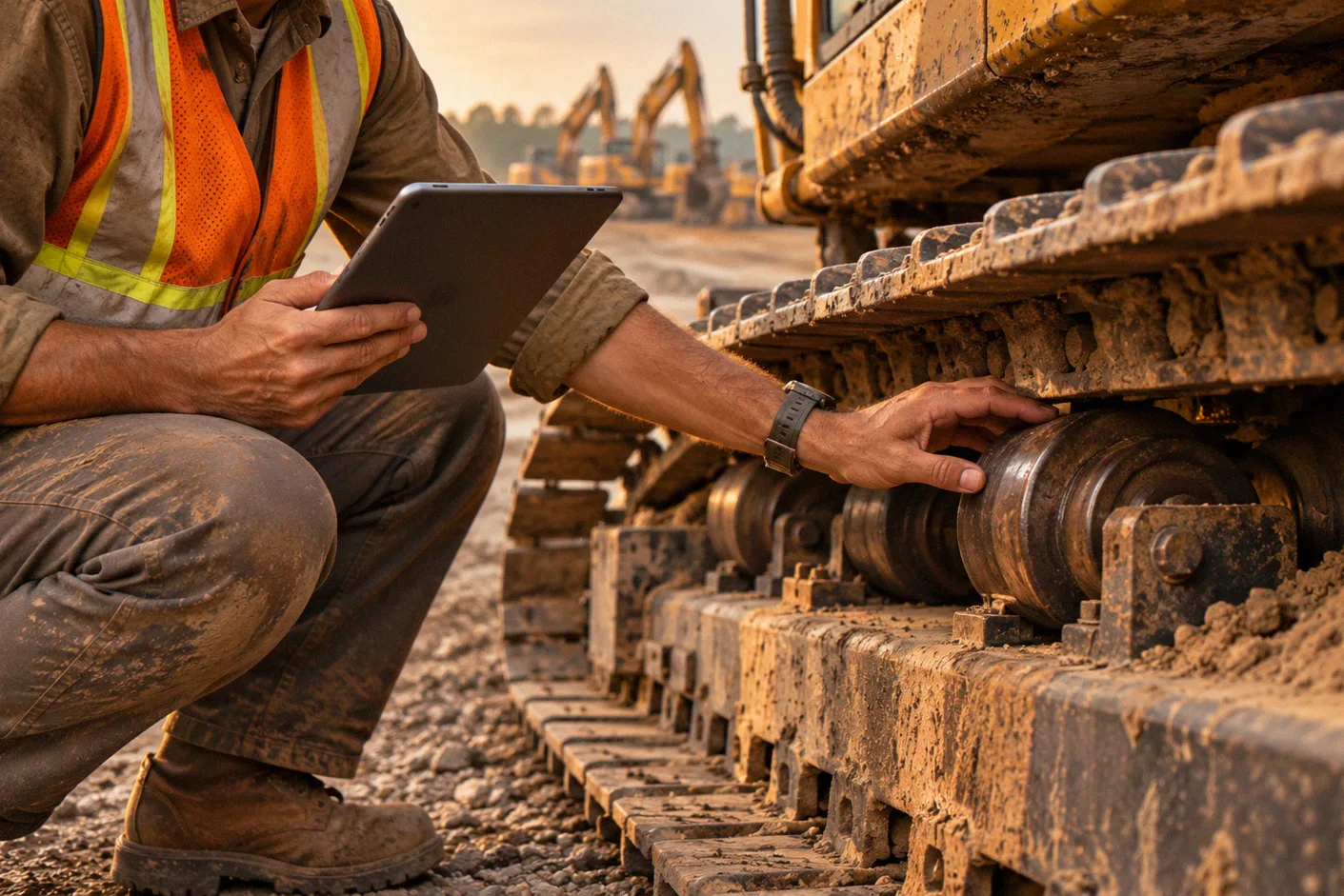
- Undercarriage: tracks, rollers, idlers and sprockets, which are expensive to replace.
- History: written disclosure of any known accident or structural repair.
Yingju Machinery provides photos, cold-start videos and hydraulic-cycle tests for a unit on request, and welcomes inspectors you appoint. A useful third-party report names the machine and serial number, the inspection date, what was checked and any limits on the inspection. Our used excavator inspection checklist goes component by component, and our inspection services page explains how independent inspections are arranged at the yard.
Judge the supplier, not just the machine
When you buy without visiting, the supplier’s processes matter as much as the machine. Ask any seller whether they can show the machine live on a video call, whether the yard is near their office, who repairs machines before shipment and who you will deal with after payment.
Yingju Machinery operates from Hefei, Anhui, with its yard close to the office so machines can be shown on request, and its own repair shop for pre-shipment work. Large orders are handled by one account manager from quote to delivery. We disclose known repair history in writing and quote each unit individually rather than publishing blanket “all-in” prices. You can see how this works for different markets on our export cases page.
Plan shipping before you choose the unit
Shipping method depends on the machine’s transport dimensions and weight, not on the word “mini”. A standard container door is about 2.29 m wide and 2.26 m high (about 2.57 m on a high-cube), so many small excavators load into a container, sometimes with the bucket removed or the arm folded. Larger compact machines often need a flat rack, RoRo or breakbulk.
| Method | Suits | Watch out for |
|---|---|---|
| Container (20GP / 40HQ) | Small machines that pass the door opening | Door height, lashing points, loading ramp |
| Flat rack | Machines too wide or tall for a container | Weather exposure, lashing drawings |
| RoRo | Self-driving machines on RoRo routes | Route availability, port access |
| Bulk / breakbulk | Large or multi-unit consignments | Port handling, vessel schedule |
For each shipment we prepare a load plan, lashing drawings and a weight certificate, and coordinate with vetted freight agents. Enter a machine’s dimensions in our shipping method calculator for a first recommendation — it is a planning tool, not a freight quote. Before paying, also confirm with a customs broker in your country that used machines of that age are allowed in and what emission or inspection rules apply. The full export process page walks through each step, and our guide on how to ship an excavator compares the methods in detail.
Used or new, and what else to ship with it
A new mini excavator makes sense when you need zero hours, a full factory specification or a specific new model. For those buyers we also supply new mini excavators, including small agricultural models. Fleet buyers often consolidate a mini excavator with larger equipment — a 20-ton excavator, a wheel loader or a dump truck — into one shipment to share freight and paperwork.
Frequently asked questions
How much does a mini excavator cost?
A mini excavator’s cost depends on brand, size, year, working hours and condition, so there is no single fair price. Compare quotes for specific units with their serial numbers, attachment lists and inspection evidence. Always check which Incoterm applies, because freight and destination charges can change the final figure a lot.
How much does it cost to buy a mini excavator from China?
The total cost of buying a mini excavator from China is the machine price plus export handling, ocean freight, insurance, destination port charges, import duties and taxes, and delivery to site. The machine price is set by the seller; the rest depends on your destination. Ask for an itemized quote and check duties with your customs broker.
How much does a mini excavator weigh?
A mini excavator usually weighs from about 1 tonne to 8 tonnes or more, depending on the model; some guides extend the class to around 10 tonnes. Use the manufacturer’s operating weight for the exact model and generation. For shipping, use the transport weight with attachments, which appears on the weight certificate.
How many hours will a Chinese excavator last?
An excavator’s service life depends on maintenance, operating conditions and how it was used, not only on where it was built or sold. A machine sold from China may be Japanese, American, Korean or Chinese-built. Judge a used unit by its condition evidence, service history and wear on key parts rather than by a fixed hour limit.
Request a machine-specific quote
The fastest way to a useful quote is to send your requirements in one message: preferred model or weight class, the main job, quantity, attachments, destination port and timeline. We reply with matching units, their photos and videos, and an itemized quotation. Request a quote, browse our full inventory, or message us on WhatsApp or WeChat from the contact page.
Written by
Yingju Machinery Export Team
The export team at Hefei Yingju Mechanical Equipment Co., Ltd. has sourced, inspected and shipped used construction machinery from Hefei, China.